

Precise positioning is of critical importance in industries such as automotive, aviation, transportation, and robotics. Calibrated devices with GPS/GNSS receivers or INS (IMU+GNSS) enable autonomous driving, safe navigation, transport monitoring or accurate robotics applications. They minimize risks, optimize resources and improve efficiency in these key areas. Calibration of these devices is necessary to ensure accurate and reliable data.
As the only manufacturer-independent calibration laboratory in the EU for GNSS and INS devices, we offer fast, reliable, and highly precise calibration with a level of quality that is second to none. Our laboratory is accredited to DIN EN ISO/IEC 17025 and performs both factory-certified and DAkkS-accredited calibrations. With our dynamic calibration, particularly of IMUs, we set industry standards.
Flexible Accreditation (in German)
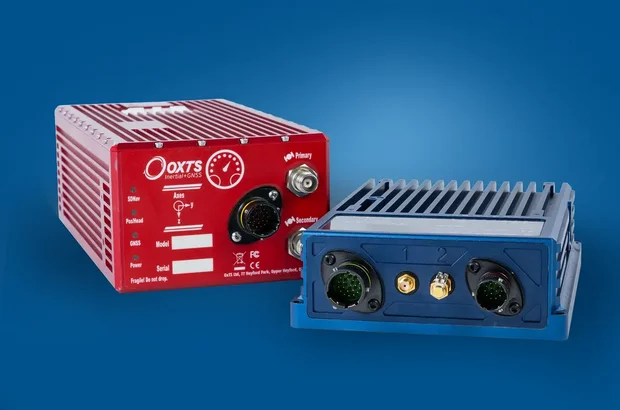
GNSS, or Global Navigation Satellite System, is a group of satellite systems used for precise positioning and navigation. The best-known GNSS is the U.S.-operated Global Positioning System (GPS), but there are other systems such as the European Galileo, the Russian GLONASS, and the Chinese Beidou.
This technology is widely used in navigation systems for vehicles, aircraft, ships and mobile devices, as well as in areas such as surveying, agriculture and emergency services, where precise positioning is critical.
Unlike GPS or other external reference systems, an INS operates autonomously, without external signals. It uses accelerometers and gyroscopes to measure object motion, even indoors.
Starting with a known initial position and orientation, the INS continuously calculates the current position and orientation data. This enables precise motion tracking in various applications, even in environments without GPS reception. However, because it is more susceptible to measurement error accumulation, it is often combined with other navigation technologies such as GPS.
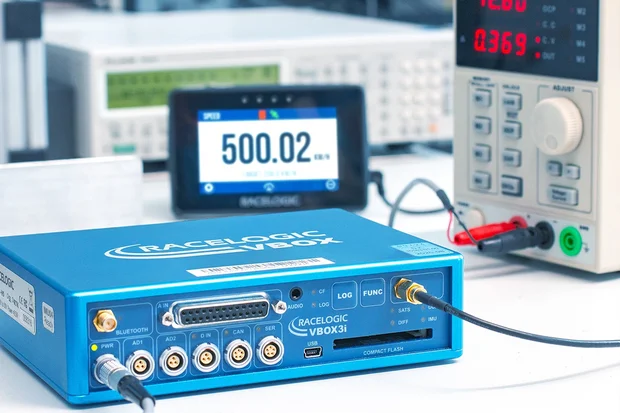
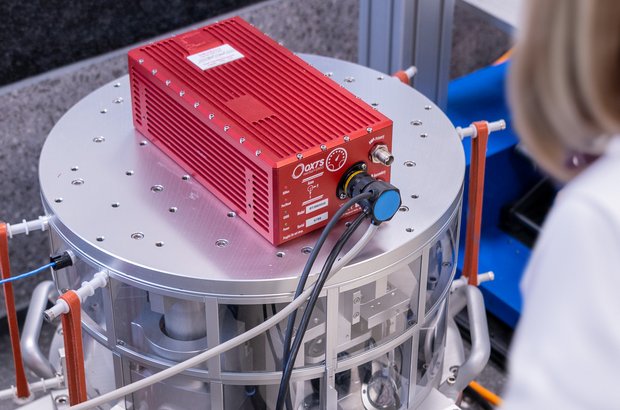
We cooperate with the company DTC - Navigation Solutions as a service partner to simplify and accelerate the calibration service for OxTS inertial navigation systems (INS) of the product series RT1000 and RT3000 in Germany.
SPEKTRA is a manufacturer-independent specialist for DAkkS-accredited calibration. Customers receive a calibration certificate, enjoy lower shipping costs and a faster return of the devices.
If your instrument is out of specification after the DAkkS-accredited calibration, DTC will cover the adjustment costs at OxTS, excl. shipping and customs costs
For more information, please visit the DTC website
The term "clipping effect" is used when the measurement signal is clipped, i.e. data is lost due to measurement range limitation.
Adjustment is only necessary if the measurement deviation is too large or the manufacturer's specifications are not met. However, OXTS devices have a relatively low risk of failure rates (less than 10%) if the devices are calibrated regularly (every 24 months).
In principle, however, calibration is only possible at the manufacturer's premises in the UK, which can sometimes take several weeks due to customs formalities. With our cooperation partner DTC, you as the customer only pay the transportation and customs costs - DTC covers the costs for adjustment. In addition, the downtime is reduced from 4-6 weeks to approx. 2 weeks.
The high-precision reference standard guarantees a frequency-stable and accurate signal without the interference factors present in nature (effects such as ionospheric interference, reflections ...).
We calibrate the sensors (acceleration and angular rate sensors), i.e. the parts that are exposed to change over time. Software and hardware hardly change and therefore have little influence).
Note: We have provided additional FAQs on calibration with SPEKTRA and SPEKTRA seminars for your reference.